What do we lose when all media shares the same distribution channels? Within the orbit of algorithmic social media such as Instagram, TikTok, and Twitter, all culture becomes content, and we find ourselves living in contentworld. Inhabiting this space, culture producers— painters, tattoo artists, journalists, comedians, fashion models, game streamers, pornstars, cultural critics, musicians, DJs, photographers, sculptors, actors, entrepreneurs, and influencers— organize their creative processes, career trajectories, and social scenes around the exacting logic of contentworld, and in doing so are all reduced to content creators. As the world economy concentrates power around a small number of techno-financial giants, very few of us have the privilege of producing creative work without an awareness of our role in the platform-centric media landscape. Though we may admit to our role as content creators, we typically downplay the extent of contentworld’s influence on us (creatives will readily joke that ‘you have to play the game’). In reality, it has infiltrated all pre-existing methods of arts distribution, discovery, and remuneration, and inserted itself as a parasitic layer that all creative force must pass through. As culture producers reorient themselves around the platforms they use, they allow it to strengthen its hold over them: the more content passes through the membrane, the better the algorithm understands the creator; and the more of an audience the creator builds on the platform, the more their real-world career relies on social media viewership. But even more harmfully, their creative output is invariably altered, since the platform is granted control over who will see the work, and in what context. Yet not all types of posts are transformed equally by their trajectory through contentworld. In particular, the emergent category of AI-generated media (slop) stands out so strongly that it has the potential to disrupt the invisible parasite. Will contentworld survive, and do creatives stand to benefit from the afterglow of slop?
To give an accurate prognosis of the future of contentworld, we must have an accurate picture of its core functioning. Contentworld’s most basic engine is the algorithm, and the algorithm works by geometrically situating creators, viewers, and content within a vast abstract space of embedding vectors. A content creator is a single vector around which swirls a cloud of data (content). From the platform perspective, a creator and a viewer, parallel halves of the userbase, are initially a black hole, inscrutable and unreadable. But they are also the only thing that is valuable to the platform: a correctly-chosen connection between them in the form of an interaction creates value, both immaterial, by keeping the viewer within contentworld, and concrete, by enabling the serving of relevant ads, respectively. To localize each of them within the embedding space, content created and content viewed serves as a sort of halo containing a silhouette of the black hole, so the movement of content must be monitored carefully.
If we are to speak precisely, the doomscrollable feeds of Instagram, TikTok, and Twitter contain posts, not content. We might think of posts only as shells around content: containers of metadata and anchors into the accessible space of URLs. But for the aims of algorithmic recommendation, the post itself contains the truly valuable interaction data of clicks, likes, and watch time. The post is the object that is emitted, and whose trajectory may be guided and tracked. Thus an inversion occurs, and the content becomes metadata to the post: useful information may be derived from observing interactions with the post, but the content is less than useless to the platform; it is in fact a vestigial organ. The orgiastic fantasy of a social media platform is to shed all user-generated content (expensive to store, not directly profitable) and become a store of only metadata: who posted, what kind of thing did they post, how is their post similar to someone else’s, how badly do they want it to be seen, who saw it and when, did they enjoy it, what did they look at next, etc.
The post is desirable for the platform, and so we might naturally think that the content itself is desirable for the viewer. However, this is actually not the case. The recentering of social media feeds around posts and metadata has occurred not only from the perspective of the platform, but also within the behavior of social media users. I cannot count the number of times I have seen, on the subway, a person scrolling TikTok like a rhythm game: letting each video play for just long enough to form a bare impression on the eyes before moving on, evidenced by the hypnotically regular motion of their thumb. I have been this person myself. The rhythmic swiper puts themselves voluntarily into the role of their platform’s content-embedding model, shouldering its labor (how selfless!), methodically using their brain to produce a rapid neural embedding of each post that they see, and, through a momentary delay in the swipe of the thumb, signaling the embedding’s alignment with their own preferences to the recommendation algorithm, which updates its priors accordingly. So then what does the viewer actually get out of seeing all these posts? First, they achieve an optimal dopamine-to-effort ratio. This is the specific mechanism that drives rhythmic scrolling, hence why we most commonly see this behavior within public transit and other spaces where time needs to be passed. Second, they absorb the cumulative embeddings of everything they see, and summon around them a swarm of personalized culture, reinforcing their own subcultural identity. This is the only benefit that is actually proportional to the viewer’s mental engagement with the content, but, as in this case, the effect may be activated even by a deluge of bare impressions. Third, they gain mediated access to the creator themselves. This third effect is what interests me the most, so let us take some time to understand its mechanism.
Vitalistic Fantasies
Western culture has long been obsessed, since the Biblical assertion that ‘God created mankind in His own image’, with the belief that a person’s creative output contains a fragment of their energy, the painted or sculpted object itself housing a live ‘spark’ that brings the creator’s mind in contact with whomever so touches the artwork itself. My personal favorite formalisation of this idea comes from Isabelle Graw, who writes in The Love of Painting that painting is sustained by ‘vitalistic fantasies’, such as ’the belief, going back to antiquity, that paintings bear some resemblance to their creators’ and ’the artist as a ghostly presence within the work’. Within contemporary online culture, this vitalistic fantasy takes two primary forms: parasociality and lore. Parasociality is a phenomenon in which frequent viewers of media personalities develop an emotional response as if they were personally friends. The extremely personal, candid, and one-to-one vibe expressed in many creator videos fuels this fantasy, directly nurturing the feeling that by watching someone’s content, you can not only be with them, but become more like then. After years of listening to Gentle Whispering ASMR to fall asleep, I feel like I know her better than some of my meatspace friends, although we’ve never met and she’s unaware of my existence.
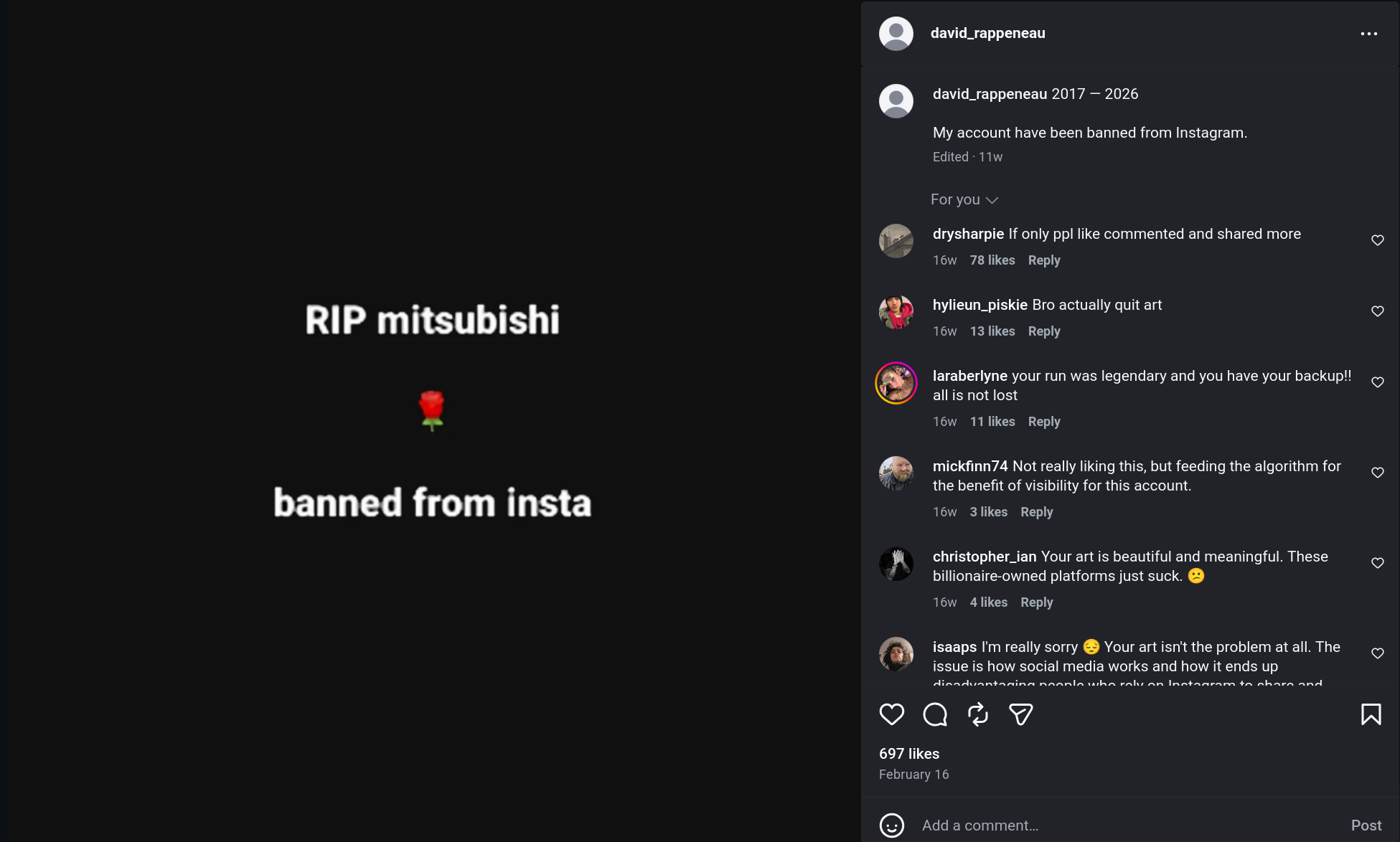
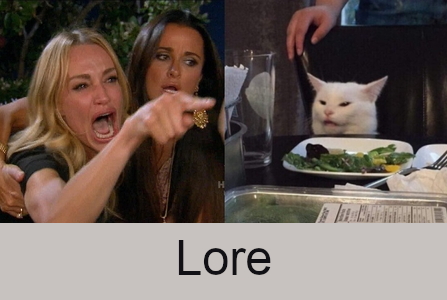
Lore, in the internet context, refers to the cloud of tertiary knowledge about a creator, after the content itself (primary knowledge) and the material information about the creator’s life (secondary knowledge). Lore is constituted by the sum of their past and current beefs, flame wars, allies, and career changes, their personal drama and hot takes, juicy details about their process and motivations, and anything else that contributes to an ’eccentric personality’.
In a recent interview with Spike Art Magazine, artist Ann Hirsch described the creation of lore as central to the process of artists becoming content creators: ‘We seem to be shifting towards a different model, where your lore itself is your creative output: your drops, your dramas, your posts. In that sense, we are moving […] toward an influencer-driven landscape where art dissolves into content’. We can understand the impression gained by viewing a few seconds of a TikTok as the feeling of stepping into the creator’s lore. Each touch leaves a residue of the creator themselves on the thumb of the viewer, who reaffirms their own taste and is strengthened by association with the gifted, funny, attractive, or otherwise enviable content creator. The content creator themselves is simultaneously strengthened, gaining both visibility on the platform and a marginally increased awareness of their existence to the viewer.
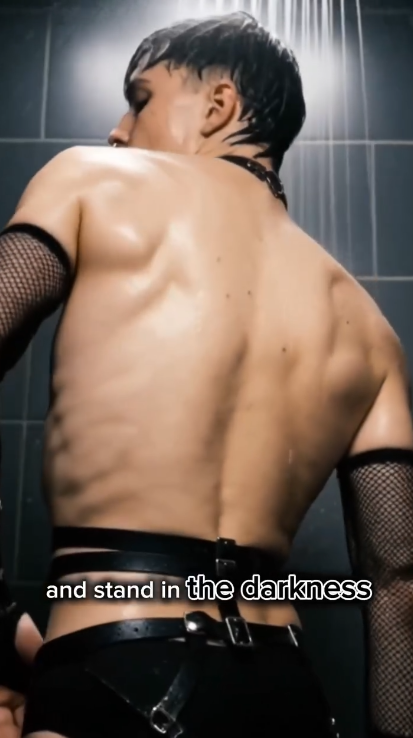
But how exactly does the vitalistic fantasy materially support the creator economy? In other words, what do creators gain as a result of your involvement in their lore? In contentworld, the received work is doubly-mediated. The first mediation occurs at the moment of its physical creation. The splattered canvas, salvedge denim, handpoked cybersigilism tattoo, CDJ, or plucked guitar, cannot contain the overwhelming human energy poured into it, and the fragment of the creator that remains is compressed, as if it were squeezed into a small bottle. The second mediation occurs when the work is shared online: the image, video, or audio track is only a projection of the original work. Listening to a bit-perfect line-out recording of a live DJ set still denies total access to the artist themselves. Instead, it invites you to imagine the mix as it was first brought forth in the club, taunting you with the fact that you missed the party. The video detailing the fashion designer’s process fuels a longing to touch the cloth, and in doing so, get closer to the artist’s true vision. A single frame of a tattooed twink in jorts and a bra makes the right viewer wonder what he has on his Fansly. The feeling generated by the brief impression of a post as it flashes through the eyes is always a miniaturized, belt-sanded, distillation of the experience that the creator is selling outside of the platform, which is invariably a more direct, less mediated access to the creator themselves.
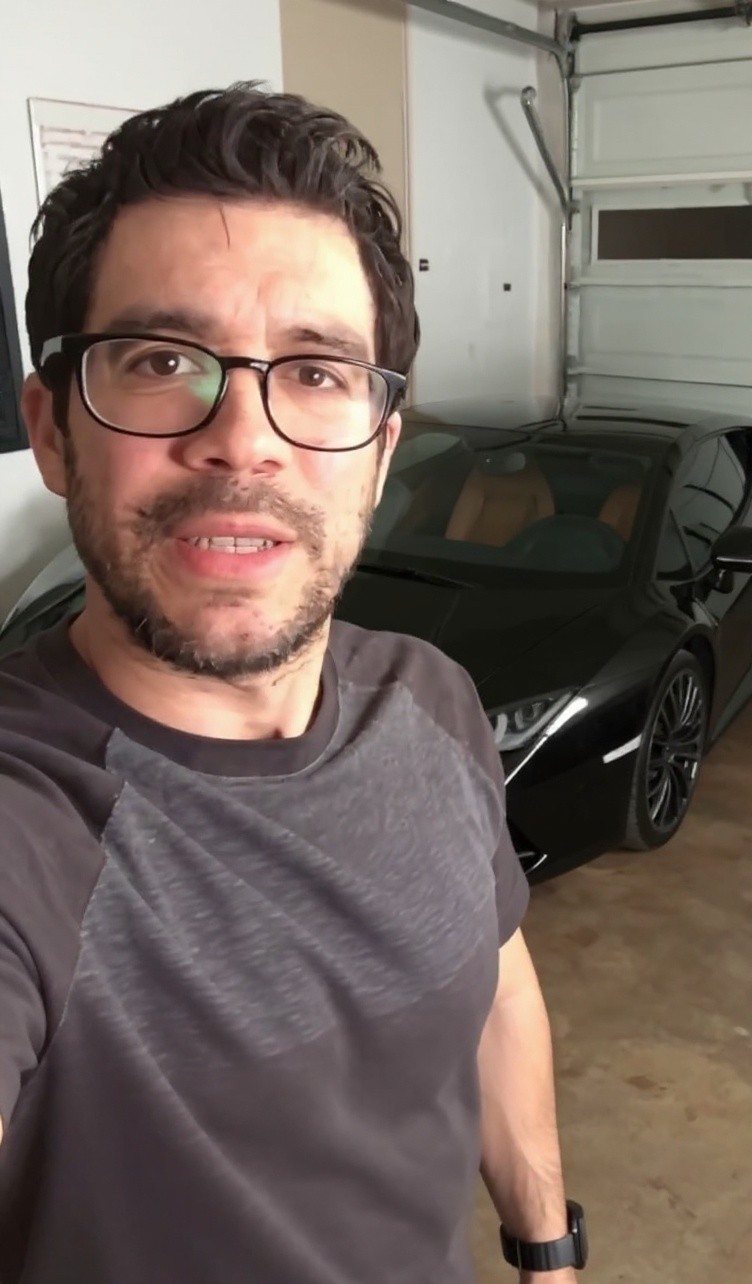
Not all creators sell this access to themselves directly to viewers. For many creators, the real goal is to sell the fact of their nonzero psychic presence in the headspace of however-many followers. Despite the superficial similarity to influencer marketing, that era is over. Influencer is a dirty word, conjuring memories of cringey brand sponsorships and fake private jets. They shill a lifestyle that they don’t actually have, and that they can’t actually give sell you. To be an influencer is to be a self-avowed sellout, flaunting unearned riches to remind the peons of what they don’t have, while to be a content creator is to be a true soldier of the underground who answers to no one. This is to say, content creators, to the extent that they are able to leverage their online audience to pay rent, must do it through different means. Most content creators of this type find themselves limited by meatspace gatekeepers (creative directors, curators, gallery owners, producers, and club promoters) and it is to this class that they are really advertising. If a content creator has proven that they can project vitalistic fantasies and low-level awareness into the minds of enough cultural consumers, a gatekeeper might guess that this audience will materialize at a meatspace event: a public will arrive, seeking an electrical encounter with the creative energy hitherto only accessed ’through a glass, darkly’.
AI-Generated Content
The nascent creator economy, whose logic I have described thus far, took form in the wake of the Covid-19 pandemic, as interaction with art, music, and work centralized online. Following the death of the ‘influencer’, it remained largely stable until AI-generated content began to flood social media feeds in late 2024. Slop, as it is now known, is low-effort clickbait content generated by diffusion models. A recent paper by C. Kommers et al. attempts to give a precise definition of slop, concluding that it is defined by three essential elements: superficial competence (appearing at first glance to have been produced by real expertise but lacking underlying substance and communicative intent), asymmetric effort (being generated by a simple prompt), and mass producibility. The term slop itself is obviously pejorative, and accordingly, AI-generated content is almost universally reviled on social media currently. Despite the negative consensus, certain works of slop have become popular and memorable enough to be reproduced and discussed, such as the ‘Italian brainrot’ characters Tung Tung Tung Sahur, Bombardillo Crocadillo, and Tralalero Tralala, and the Fruit Love Island series (if you’re reading this post-2026 and have never heard of these things, keep in mind that a year in the real world is a century in online culture). While the Italian brainrot images are quintessential AI slop, Fruit Love Island stands apart: it has a coherent (even if embarrassingly cliché) narrative, and its creation belies at least some effort to write the script, generate the clips, and then edit them together. Yet Fruit Love Island generated more negative coverage than nearly any previous slop project: in one BBC article, a ‘digital culture expert’ critiques the series, saying ‘we’re using massive amounts of resources to create content that doesn’t actually have a message or isn’t pushing the conversation forward’. The two main critiques of AI slop are on display here: its resource usage (electricity and water), and its lack of substance beyond the surface level.
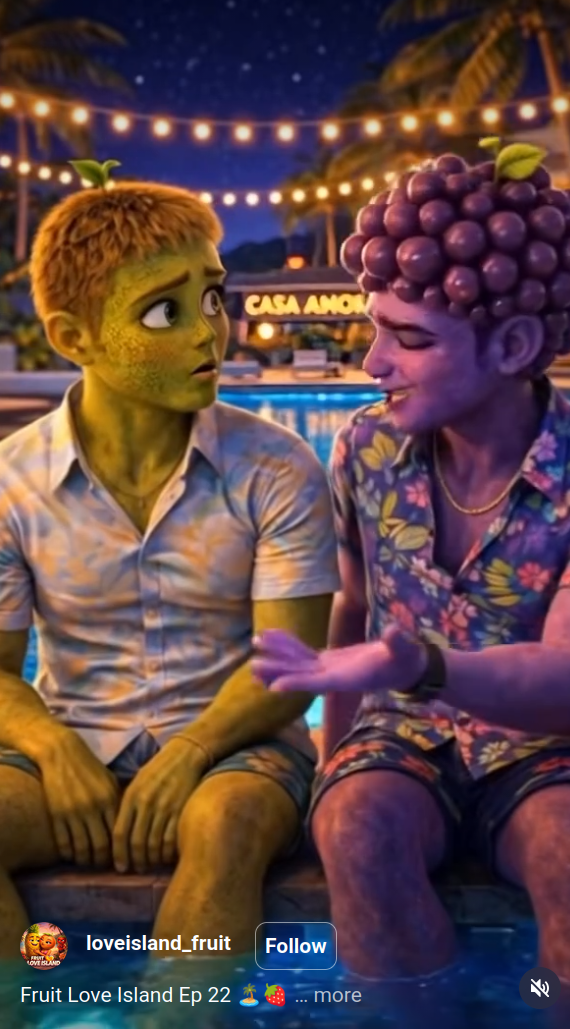
Both of these points are accurate. But in the context of Fruit Love Island, are they fair? Reality shows such as (human) Love Island are almost universally relegated to the category of lowbrow filler. This even extends to the people that make them: the producers are candid about the intentional planning needed to create such hyperconcentrated dopamine drama. One finds it difficult to say with a straight face that Love Island is ‘pushing the conversation forward’. It goes without saying that the carbon footprint of creating a single TV episode is orders of magnitude more than what is required to generate a whole season of slop-television. Moreover, within social media feeds, both shows are received by the viewer as a phantasmagoria of out-of-order short clips, each presenting a bite-sized, carefully choreographed character arc or moment of drama. As you watch, for example, a supercut of an enemies-to-lovers cycle, the rapid changes in music indicate the emotional tone of the current instant, and the character traits are so compressed that no prior knowledge is needed to understand the microplot on display. Even if cliché plots and immediate payoffs of the AI-generated show diverge from the drama-generating techniques of its human-produced counterpart, their entry into contentworld necessitates a flattening, reducing them both to the same type of content.
How Does it Feel to Look at Slop?
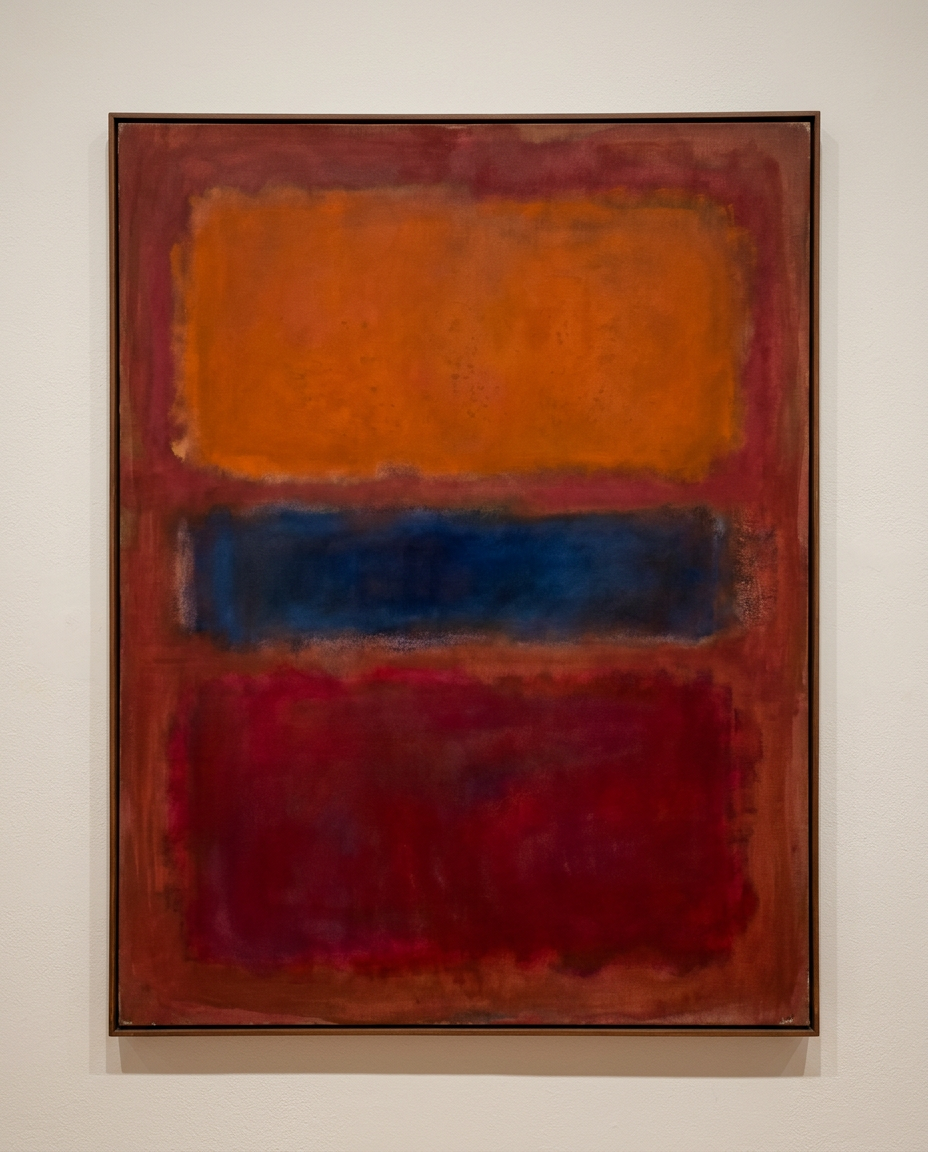
Nonetheless, we cannot say that there is no difference between Love Island and Fruit Love Island within contentworld. One amuses and the other provokes outrage. To return to artworld, there are countless technically-skilled painters (many of whom have flourishing careers!) whose Instagram accounts are filled with wall-sized permutations of Basquiat, Rothko, Richter, et al. The mental impression produced by seeing one of their works (or more realistically, a timelapse of its creation process) is concentrated on the aesthetic, which initially forestalls our would-be harsh judgment of its (lack of) originality, while the corresponding impression from an AI-generated Rothko is a full stop; we see past the image and immediately file it away in a bucket of slop. Though the human-made painting invariably contains some level of formal innovation and genuine creativity, this really has very little to do with how we judge it. The slop image cannot be judged on its external appearance, because within the first instant of real contact, that is to say the moment that we look at the image with an eye towards its creator and creation, we find a void that interrupts our process of analysis. From our state of knowledge about the image’s origins, the void behind the post, common to all AI-generated content, categorically refuses us access to the vitalistic fantasy of interaction with a creator. This denial of the vitalistic fantasy is the critical difference our experience of the two types of content, and indeed the thing that makes slop so dangerous within the content creator economy. It drags out the corpse of truly-social media (heyday 2015), points at it, and reminds the viewer that not all dogs go to heaven. It invites a Google search for ‘dead internet theory’. It lays bare the shallow reality of contentworld.
Despite its negative psychological effects on content viewers, the flood of AI-generated content actually stands to benefit creators. This is surprising, because anti-AI politics currently form a substantial part of the discussion among online artists (and many other categories of creators, especially models and actors). Yet it is exactly this pro-vs-anti AI discourse that artists can use to their advantage. The most fundamental need of any creator’s strategy is uniqueness, a way to convince viewers of their authenticity and the raw vitality contained in their lifeworld: the latent emotional charge of their posts relies on it. Moreover, to convert views to sales, a creator must distance themselves in the perception of their audience from the content influencer, characterized by laziness, entitlement, and willingness to work with corporate powers. They must humanize themselves to their audience, and reveal enough of their personal feelings and lifeworld to begin the process of accumulating lore. All of these positioning goals can be achieved simultaneously by publicly declaring war on GenAI. An anti-AI stance signals disdain for big tech and dedication to hard work, suggesting that a creator’s work is difficult and laborious to make, increasing its value. It generates lore: immediately, by calling attention to the creator’s political views, and continually, since each new troll stepping in with a hot pro-AI take renews the soapbox and allows the creator to grandstand a little bit more. But most importantly, it activates the vitalistic fantasy by negation, painting a contrast between the soulless and unoriginal nature of slop, and the ‘intrinsically lifelike’ nature of human-made posts. This received idea in the mind of the viewer, though clearly a general take about processes of creation, remains nevertheless linked to the content creator themselves. In other words, it revives the importance (within the platform context) of the creator’s output (which is otherwise irrelevant in contentworld), by momentarily stitching the creator back into their own work. The content becomes more adept at inciting jealousy of the real (recall the centrality of this jealousy to a creator’s sales strategy), and the imagined possibilities of the creator’s unmediated output grow loftier.
The GenAI discourse has another benefit for artists specifically. Contemporary art has struggled greatly to be accessible to people who aren’t caught up in its layers of codes and references, and to explain its diminished focus on aesthetics and technical skill as compared to modern and premodern art. The animating force of a work can of course lie in invisible domains, such as the other works it references, the unique process of creation, the way it forces a viewer to interact, or the life it has lived since being put into the world by its creator. This is in perfect contrast to slop, which comprises only two elements: a self-contained prompt, and a generated result, each bounded within a few megabytes of data. The slop-creator effects an exponential multiplication of previous thought onto contentworld, materializing and exhausting all externally visible trends in visual art. The ‘grim reaper’ of ensloppification will redshift each tired idea into background noise more rapidly than the previous. But as the volume of cliché increases, so does the need for newness. In other words, exposure to slop feeds the desire for internality, for depth, for something worth explaining. Slop discourse primes the viewer to think more critically about human-made art, the intentionality behind it, and what makes it different from other art. An artist who spins anti-AI sentiment into their lore and leverages it to put focus on the interesting internal parts of their oeuvre, such as identity, materiality, inspiration, and process, will find an audience more willing to step out of the passive mode of ambulatory viewing and make an active effort to understand the work in front of them.
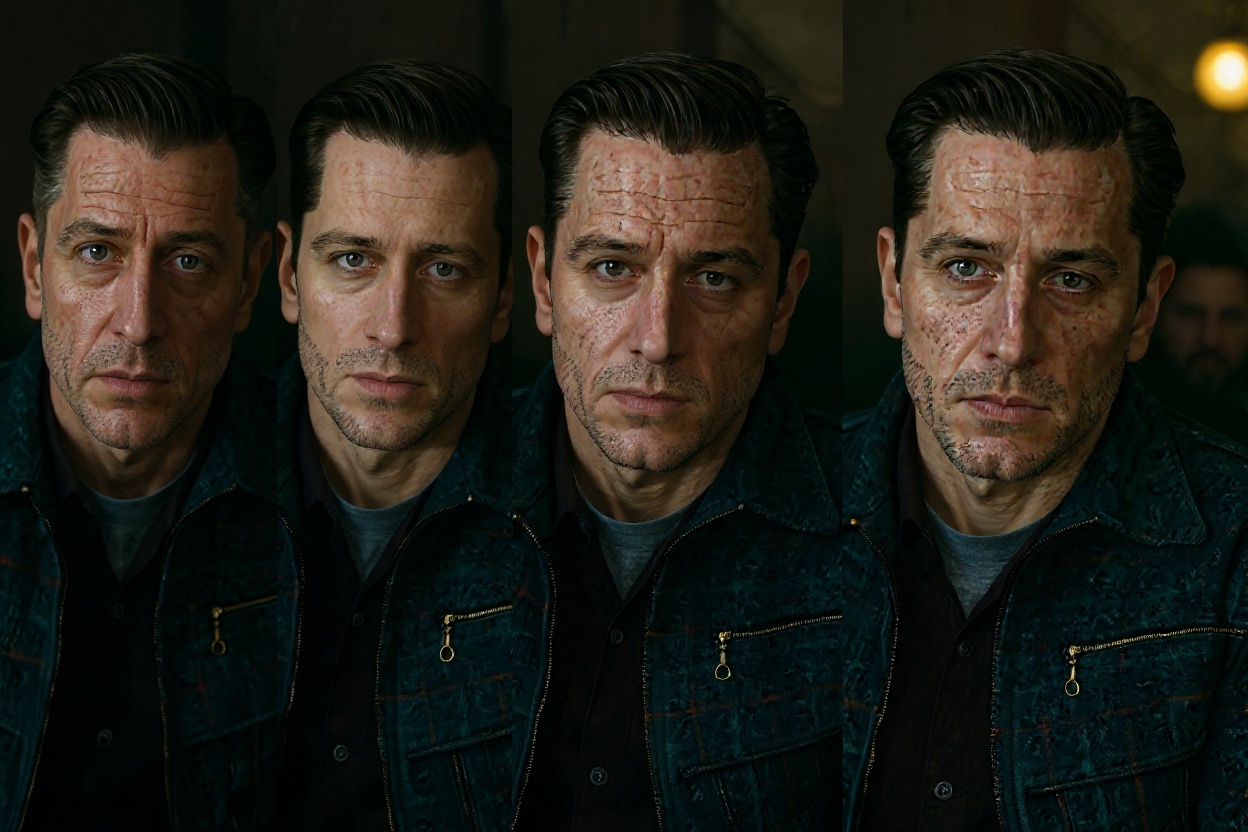
The model of slop that we have arrived at is underpinned by a morbid irony: slop itself is an Oedipal child of contentworld. The platform economy provided both the resources, in practically unlimited R&D funding, and the raw materials, in images and text, needed to develop and train image generation models. Will slop kill contentworld from within? Likely not. But it will not disappear either. It is frequently argued that within the next few years, AI will be so incorporated into media production that we won’t notice it: it will cease to be controversial and become just another tool for creatives to reach for. This is probably true for normal digital media (television, film, video games), but slop, true slop, which resists reduction into content, will undoubtedly continue to circulate, the blankness behind it unable to be meaningfully filled. In any case, as AI-generated imagery becomes more common in mass media, the anti-AI discourse will fade. Thus artists must strike while the iron is hot, while consumers of culture are still surprised enough by slop to notice their own reactions to it: not solely that they hate it, but that the vitality it lacks can be found elsewhere.
References
‘Sex, Booze and Psychological Warfare on “The Bachelor”: ViceTV Docuseries Exposes Dark Secrets of the Popular ABC Franchise’, AOL, 23 August 2023, https://www.aol.com/entertainment/sex-booze-psychological-warfare-show-081945897.html.
Sakshi Venkatraman, ‘Think Love Island Is Bad? Wait Till You Meet the AI Fruit Version’, BBC News, 29 March 2026, https://www.bbc.com/news/articles/ckgr35y26q7o.
Morgane Billuart, ‘Ann Hirsch: The Godmother of Internet Girlhood’, Spike Art Magazine 87 (Spring 2026).
‘Comedian (artwork)’, Wikipedia, https://en.wikipedia.org/wiki/Comedian_(artwork).
Hannah Ewens, ‘How the Word “Influencer” Lost All Meaning’, Vice, 5 July 2021, https://www.vice.com/en/article/how-the-word-influencer-lost-all-meaning.
Glenn Garner, ‘James Cameron Wants to Use AI to “Cut the Cost” of Filmmaking’, Deadline, 9 April 2025, https://deadline.com/2025/04/james-cameron-use-ai-cut-cost-filmmaking-1236364940/.
Isabelle Graw, The Love of Painting: Genealogy of a Success Medium, Berlin: Sternberg Press, 2018.
Cody Kommers et al., ‘Why Slop Matters’, ACM AI Letters, 2025, https://dl.acm.org/doi/10.1145/3786777.
Arvind Narayanan and Sayash Kapoor, ‘AI as Normal Technology’, Knight First Amendment Institute at Columbia University, 15 April 2025, https://knightcolumbia.org/content/ai-as-normal-technology.
Mark Sweney, ‘Netflix Uses Generative AI in One of Its Shows for First Time’, The Guardian, 18 July 2025, https://www.theguardian.com/media/2025/jul/18/netflix-uses-generative-ai-in-show-for-first-time-el-eternauta.